
New Area of the Foundation

Human Development

What is the new "Human Development" area of the Libertad y Progreso Foundation?

The Department of Human Development focuses on promoting public policies that enhance individual capabilities—particularly from early childhood—as the foundation for economic and social progress.
In this initial stage, the department will focus specifically on education and neuroscience, with the goal of maximizing each individual's potential and, through this, building a more prosperous society.

The department’s work is built on three pillars:

Education

Promoting freedom of educational choice, innovative methodologies, and systemic reform.

Health and Neurodevelopment

Specifically focusing on early childhood, seeking low-cost, high-impact interventions.

Labor and Skills

While not yet fully developed, this remains a key long-term strategic axis.
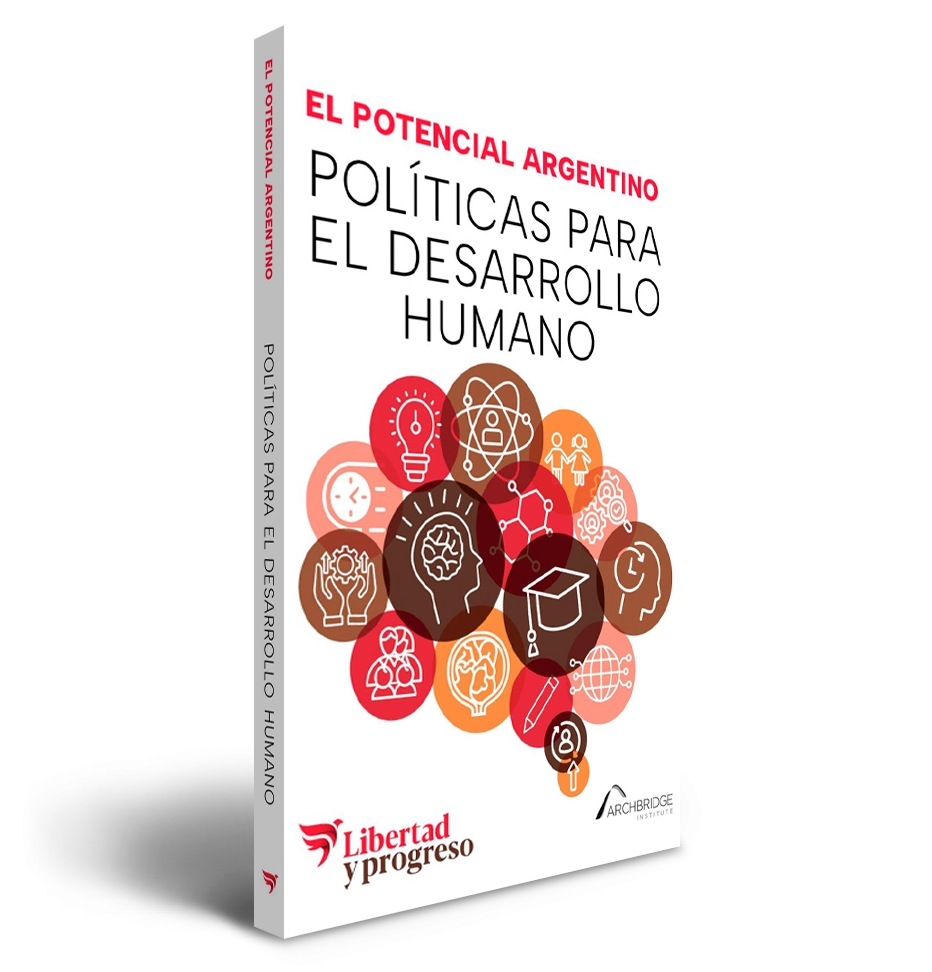
Request our book on human development policies

General Objectives

Our goal is to develop the full potential of every individual from childhood by promoting public policies based on liberty, scientific evidence, and the empowerment of families, teachers, and institutions to build a more prosperous society.

1. Public Policy Development

Create public policies for childhood, education, and neuro-emotional development designed to empower Argentines and maximize their potential. Collaborate with political stakeholders to drive their implementation.

2. Research and Analysis of Educational Policies

Provide evidence and arguments in favor of an approach based on freedom of choice and individual responsibility.

3. Dissemination and Public Education

Conduct information and education campaigns for the general public regarding the benefits of an educational system that promotes the freedom to choose among diverse options.

4. Advocacy for Educational Choice

Advocate for policies that allow families and students to choose the educational institutions that best align with their needs and values.

5. Importing Knowledge in Neuroscience and Emotional Well-being

Research and disseminate low-cost, high-impact interventions that have proven effective worldwide. Facilitate their local implementation.

6. Empowering Parents and Teachers

Promote reforms to grant schools greater autonomy, make teaching and curricula more flexible, and encourage the active participation of families and students in their education.

7. Fostering Educational Innovation

Promote new technologies and educational methodologies, adapting them locally and encouraging innovation through trial and error to improve education.

Programs and Projects

Educational Intervention Model (Pilot Project)

Develop and evaluate a replicable educational model based on neuroscience and multiple intelligences
Currently implemented at the San José Providente Day Center (serving 360 children). It includes comprehensive diagnostics, teacher training, family engagement, and impact metric monitoring. The intervention aims to improve cognitive, emotional, and social skills.

White Paper: Best Practices

Propose evidence-based educational reforms to modernize the Argentine system.
Based on the pilot project results and international research, a technical public policy document will be drafted. It will be published and presented to legislators and Ministers of Education for implementation.

Education Leaders’ Summits

Foster collaboration among organizations, academics, and political stakeholders in education.
Six annual meetings will be held with at least 10 organizations to share progress and coordinate efforts. Minutes will be drafted, and joint initiatives will be promoted.

Campaign to Repeal Article 97 of the National Education Law

Promote educational transparency and allow the publication of results by school.
A media and social media campaign to inform the public about the drawbacks of the current article. The goal is to generate public pressure for its amendment and present a proposal to Congress backed by allied organizations.

Educational Freedom Index

Measure and compare educational freedom in Latin America.
Directed by Martín Krause and funded by the Templeton Foundation. It collects data across several countries to create an index demonstrating how greater freedom improves outcomes. Findings are disseminated through media and meetings with opinion leaders.

Public Policy Book

Systematize and disseminate the foundation's proposed policies to improve quality of life in Argentina.
Publication of a book with chapters on human capital, health, education, etc., featuring contributions from experts such as James Heckman. It will be distributed to politicians, journalists, and academics.

Social Media Video Series

Raise awareness about the need to reform the educational system.
Six videos will be produced over two years featuring reform proposals (modernization, decentralization, teacher empowerment). These will be supported by campaigns and influencer outreach to expand their reach.

The Knowledge Revolution

Explain the Human Development department's approach and impact to the general public.
A series of three short videos aimed at young people, showcasing innovative methods and real-life cases. It seeks to inspire and generate interest in educational transformation.

Foundation Research

Analysis of Emotional Profiles and Their Impact on Entrepreneurship Development

Donate