

¿Por qué cayó el dólar?
Iván Carrino con Jonatan Viale en el programa Realidad Aumentada. El economista analiza el tipo de cambio en Argentina.
- Hits: 4

Iván Carrino con Jonatan Viale en el programa Realidad Aumentada. El economista analiza el tipo de cambio en Argentina.
PERFIL - El anuncio del ministerio de Economía este lunes de que no se solicitarán asistencias del Banco Central al Tesoro en forma de Adelantos Transitorios en lo que resta del año fue leído por los economistas como una medida “en la dirección correcta” que busca mandar al mercado un mensaje de moderación en la emisión monetaria en medio de la batalla por lograr la calma cambiaria aunque algunos analistas evaluaron que luce “escaso” para revertir las expectativas y abogan por una mayor reducción del déficit fiscal para dar una señal más contundente. Hay analistas que dudan de que se vaya a cortar la asistencia financiera de la entidad monetaria al Tesoro porque plantean que el comunicado del Palacio de Hacienda solo hace mención a no recurrir a Adelantos Transitorios, pero nada dice sobre las utilidades del Banco Central. Según los cálculos privados, las utilidades del BCRA ascienden a unos $750.000 millones.. Luego de que se conociera la cifra de déficit fiscal de septiembre que encendió de nuevo la alarma de los analistas sobre una mayor aceleración de la emisión hacia fin de año, Economía en las dos últimas semanas dio un giro para demostrar que el gobierno dependerá menos financieramente del BCRA.
Fuentes de la entidad monetaria confirmaron hoy que el viernes último se concretó la reducción de 101.000 millones de Adelantos Transitorios. Se suma a las cancelaciones ya efectuadas por el Tesoro en octubre por cerca de $ 26.000 millones. SEÑAL INSUFICIENTE. Para el director de la consultora Seido, Matías Carugati, el anuncio realizado hoy antes de que abrieran los mercados es una “señal en el sentido correcto, pero tampoco es algo que sea muy significativo, están diciendo que no van a tomar más adelantos transitorios, algo que casi ya no podían hacer porque estaban cerca del límite”. “Como señal, es correcta en la dirección pero acaso luce algo escasa en términos de potencia. Desde el gobierno siguen con esta estrategia de ir soltando medidas cada tanto, en vez de armar y presentar un paquete entero de una sola vez. Lo que tendría mayor efecto sobre expectativas”, juzgó.
Carugati acotó que “al margen de eso, nada dice el comunicado sobre las utilidades del BCRA; todavía quedan $ 785.000 millones sin distribuir y que implicarían emisión de dinero”. De igual mirada, Fernando Baer, economista jefe de Quantum Finanzas, especuló que “probablemente hayan tocado el límite que por Carta Orgánica pueden utilizar de adelantos, lo que no quita que usen otras fuentes del BCRA que pueden ser utilidades, es una cuestión contable de los activos que tiene en moneda extranjera y cómo evoluciona el tipo de cambio, eso les puede dar algo de caja”.
“No creo que cambien las expectativas pero va en línea con algún tipo de racionalidad, hay que ver que terminan haciendo, si ajustan un poco más el déficit en noviembre y diciembre como para ahorrar algo más de necesidad de financimiento", opinó. Según estimó Baer, el BCRA “en 2018 y 2019 tuvo ganancias acumuladas no distribuidas por casi $1,9 billones, y en lo que va del año ya utilizó $1,2 billlones, con lo cual le quedan utilidades por unos $750.000 millones”. En la misma tónica, el director de LCG, Guido Lorenzo, planteó que “nos preocupaba más que nada cómo iba a seguir con Adelantos Transitorios porque por ley estaba sin margen ya, así que da la tranquilidad que no se va a violar a la carta orgánica del BCRA lo cual sería una muy mala señal”.
“Respecto a las expectativas, es bueno que reafirme en cada comunicado el problema de exceso de oferta de pesos que pueda existir. El problema es que no se sabe aún si es un compromiso real o si es simplemente un juego de señales del tipo: el sector privado quiere oír esto, se lo digo. Eso se va a saber principalmente en el financiamiento del déficit 2021. Eso calmaría más que el horizonte de dos meses”, argumentó. Según su visión, para calmar esas expectativas sería más contundente exigir una reducción mayor del déficit fiscal y ahí hay que ver si está el compromiso, creo que sería una buena oportunidad para generar credibilidad”.
Por su parte, Santiago Gambaro, de la consultora Analytica, dijo que “pareciera estar vislumbrándose una coordinación entre el Banco Central y el Tesoro que antes no había, todas estas señales seguramente contribuyan a mejorar las expectativas”. De todos modos, manifestó que "deberíamos estar atentos a qué pasará con el próximo tramo del IFE, para ver cuál será la dimensión del ajuste fiscal y el compromiso en ese sentido, porque no creemos que el recorte provenga por tarifas u obra pública en el corto plazo por su impacto en precios y actividad respectivamente”.
Para el director de la Fundación Libertad y Progreso, Aldo Abram, “la jugada que hizo Guzmán anunciando que iba a empezar a financiarse en el mercado voluntario de deuda para dejar de presionar sobre el BCRA fue muy hábil, porque si se cumple, hacia adelante habrá una menor depreciación de la moneda, y eso tiende a tranquilizar a la gente”. No obstante, Abram consideró que estas medidas “generan tranquilidad pero no resuelven la enfermedad, hay que resolver los problemas de fondo, esto te da tiempo, pero si no curas al paciente, se va a morir”.
Más optimista, José Echagüe, de Consultatio Plus, sostuvo que “es un anuncio muy positivo, el gobierno acierta en dar un poco de certidumbre a la emisión de pesos” que “es un punto clave para estabilizar el tipo de cambio”. “Algo de reversión de expectativas ya estamos viendo, la brecha está bajando, los bonos estabiilizaron su caída, no se si se vamos a tener efectos inmediatos en términos de dinámica de reservas, pero esto es algo que sin duda había que hacer y creo que el mercado le va a dar una bienvenida a eso”, auguró.

TUCUMÁN NOTICIAS - Fundación y Libertad realizó un artículo sobre cómo la estrategia de la pandemia por parte del Gobierno nacional y la falta de reformas estructurales llevó a que Argentina sea uno de los países donde se perdieron más puestos de trabajo. Sólo fue superado por Perú, Colombia y Venezuela.
El empleo en Argentina cayó 20,7% (una pérdida de 2,4 millones de empleos) en el segundo trimestre del 2020 si lo comparamos con el mismo período del año anterior según datos del INDEC. Las medidas restrictivas de confinamiento afectaron gravemente la situación del mercado laboral. Nuestro país fue la regla.
A pesar de la imposición de doble indemnización y prohibición de despidos, la mala regulación laboral existente hizo que nuestro país estuviera entre los que más destruyeron empleo. Una regulación del mercado laboral restrictiva y altos impuestos al trabajo es el principal motivo de la alta informalidad argentina. Allí impactó más.
Natalia Motyl, economista en la Fundación Libertad y Progreso destacó que las principales razones de la caída responden a “un mercado laboral más rígido con altas regulaciones e impuestos; así cómo mayores dificultades para realizar teletrabajo; mayor incidencia de la crisis en los trabajadores del sector informal y las restricciones de recursos para implantar medidas de respuesta adecuadas frente a la pandemia”.
Y agregó que para incrementar la inversión y la productividad es imprescindible que las regulaciones laborales sean “equilibradas tanto para proteger al trabajador como para facilitar la incorporación de nuevas tecnologías -a través de mayores inversiones-, que hagan subir el salario real”.
El economista y Director de la Fundación Libertad y Progreso, Aldo Abram expresó que “lamentablemente, la pésima y arcaica regulación laboral de Argentina y las medidas tomadas para restringir los despidos implicarán que el país también será de los que más tarden en recomponer su nivel de empleo, especialmente el formal”.
En este sentido, afirmó que “probablemente esto expulse a la informalidad a muchos que antes estaban en blanco e impulse a los distintos niveles de gobierno a crear puestos de trabajo en sector público inútiles para la sociedad; lo que complicará mucho más las posibilidades de crecimiento futuro y empobrecerá más al conjunto”.
Roberto Salinas León en los ciclos de conferencias de Libertad y Progreso

We are an international coalition of public policy research institutes and think tanks that believes that collaboration, open trade and innovation is crucial to the response to Covid-19.
As the 2020 World Health Assembly re-convenes in Geneva, we urge governments to commit to simple reforms that will accelerate access to medicines, including those in the process of being developed for Covid-19. These reforms will have benefits that last beyond the current pandemic, increasing access to medicines for all.
In the majority of developing countries, most healthcare costs are met directly out of pocket due an absence of functioning healthcare insurance and delivery. To improve access to medicines, governments should take steps now to remove unnecessary medicine price inflators, many of which are self-imposed.
All countries need access to medicines and vaccines as cheaply as possible. Yet governments raise their price by levying needless import tariffs:
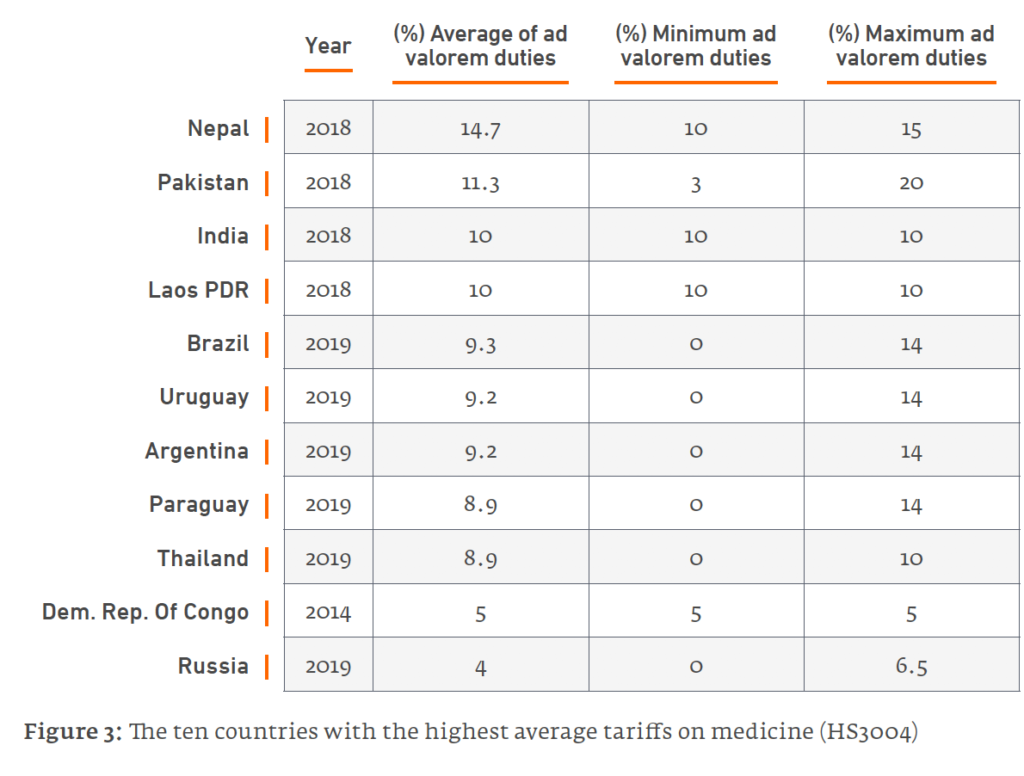
Pharmaceutical manufacturing value chains are increasingly globalised; even low tariffs have a cumulative impact on a product’s end price, ultimately paid by patients. Abolishing these tariffs would save patients up to US$6.2bn in China, US$2.8bn in Russia, US$2.6bn in Brazil, US$737m in India, and US$252 in Indonesia.
In the context of Covid-19, some countries have shown leadership by exempting related medicines, vaccines and medical supplies from import duties and taxes including Pakistan, Brazil, Colombia and Norway.
Although a positive step, many of these reforms are only temporary. They create uncertainty for exporters over the long-term direction of individual markets and undermine preparation for future pandemics. Further, they only cover a narrow sub-section of medicines, when all medicines are “essential” to those who need them.
Governments should commit to permanent tariff reductions in medicines and vaccines via legally binding WTO commitments.
In many countries domestic taxes can make up 20-30% of the final price people pay for medicines. Countries at all spectrums of economic development apply VAT on medicines. Other taxes include state excise duty, stamp duty, community tax and other fees. In lower and middle-income countries, the range of total tax is 5%-34%. These taxes are regressive, undermine access to medicines and generate little revenue (between 0.03% and 1.7% of total tax revenue).
Medicine prices are increased, and access delayed, by Non-Tariff Measures (NTMs) such as inefficient customs procedures, cumbersome export and import procedures, administrative red-tape, hidden taxes, congestion fees and a generally sub-optimal trade infrastructure.
For medicines, NTMs also include burdensome labelling and packaging requirements, the need for importers to have multiple permits and licenses, and the requirement that imported medicines must pass through specific ports. These barriers are often higher in developing countries.
The time and effort involved in navigating these procedures adds to the costs of trade in medicines, costs which are ultimately passed onto patients. For smaller markets, manufacturers might consider it unworthwhile to export, meaning that patients will enjoy fewer types of medicine and less competition.
Innovative vaccines and therapeutics will be essential to ending the Covid-19 pandemic, and also to tackling the rising burden of non-communicable diseases that accompany ageing and more affluent populations throughout the world.
Sadly, patients in developing countries wait longer for these innovations. There are several reforms which could address this problem.
Patients face long waits for new treatments while waiting for national drug regulatory authorities to approve them, even if they have already been declared safe and efficacious by a stringent regulatory authority such as from the US food and Drug Administration (FDA) or European Medicines Agency (EMA). Regulatory delays are unconscionable particularly in the context of new Covid-19 medicines and vaccines.
The World Health Organization says that these delays are caused by overly complicated guidelines and lengthy assessment periods, and backlogs due to resource constraints. Many regulators in developing countries duplicate work already done by more mature regulatory authorities.
Policy Recommendations
Patients are denied access to life saving medicines waiting for government agencies to decide if they can be provided by the public sector. Once a medicine has received regulatory approval, it cannot be adopted by the public health system until the government decides whether it can be included on the National Formulary List and if so at what rate it will be reimbursed. These decisions can take several years, further delaying access to medicine and undermining patient choice. Such delays would be particularly damaging for new Covid medical technologies.
Policy recommendation
Many countries try to promote industrial and economic development by requiring companies to locate parts of their value chains within their borders in return for license to operate. Examples include banning the importation of drugs that have a locally-manufactured equivalent; prioritising local companies in state procurement tenders; and dictating where companies to locate manufacturing facilities in return for market access.
Such “localised barriers to trade” (LBTs) balkanise value-chains and drive up the end price of medicines by requiring firms to create multiple and duplicative local manufacturing plants. They also reduce numbers of medicine suppliers, leading to higher prices, fewer choices and shortages.
In the context of Covid-19, such regulations could stand in the way in the rapid manufacture and global distribution of new vaccines and therapeutics.
Biopharmaceutical innovation will play a pivotal role in resolving the Covid-19 crisis, both in the form of new treatments that can mitigate the worst effects of the disease, and ultimately a preventative vaccine. Such life-saving technology is less likely to be forthcoming if governments sacrifice intellectual property (IP) rights, even before such technologies have been invented.
IP rights facilitate cooperation and the sharing of proprietary data, know-how and technology between different and often competing companies and organisations, both domestically and across borders. They also provide an incentive for the private sector to commit and share resources with competitors to manufacture billions of doses and distribute them globally in a short space of time. Even if IP rights were confiscated, no government has the capacity to manufacture novel, complex vaccines and medicines at vast scale. Cooperation with rights holders is surely preferable to confiscation.
The IP system is working well in the pandemic. There are now over 1240 active clinical trials on 534 unique therapies, and there are 43 unique vaccines being tested.
There is no evidence that IP rights will pose a barrier to access, as most companies working in this area have stated any new products will be available on a non-profit basis. This is welcome, although it is important as many organisations as possible are incentivised to commit their resources to COVID-19 treatments and vaccines through the IP system.